 |
  
 |
| |
|
|
 |
 |
|
SRI KRISHNA GANA SABHA presented THE 20th NATYA KALA CONFERENCE Topic: ANCIENT FUTURES: Then & Now of Indian Dance Date: Dec 16 - 22, 2000 Venue: Sri Krishna Gana Sabha, Chennai Convenor: ANITA RATNAM
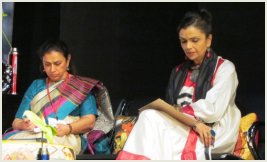
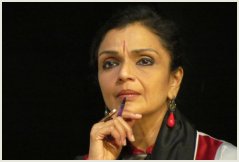
The Natya Kala Conference is the only prestigious South Asian dance conference in India that attracts eminent dance professionals and dance enthusiasts from around the world, to share perspectives and experiences. The annual forum provides for insightful short performances by participants about ancient traditions as well as very avant-garde interpretations about dance. For the 20th Conference held between Dec16-22, 2000 at the Sri Krishna Gana Sabha Auditorium, Chennai, the topic for discussion was "ANCIENT FUTURES: Then & Now of Indian Dance". The response was rich and varied and the daily houseful attendance was asurprise feature, with dancers, critics and scholars attending in large numbers. There was also an interesting 7 day workshop, "Writing Dancing" that was open to all interested, young writers to enhance writing skills in Indian dance which also had participants from the actual Conference and met with a huge success. It was managed by Leela Venkatraman, noted dance critic from New Delhi and the last day saw an open forum along with noted writer/critic Shantha Serbjeet Singh, New Delhi. For a copy of the Conference Brochure / more details on the 20th Natya Kala Conference, write to aratnam@vsnl.com
The year 2000 brings to this ancient city the future of dance arising from its past. Hence, we've chosen the title of ANCIENT FUTURES, for, nothing represents this continuity in and of our dance culture better than the metaphor of an ever-flowing river, forever renewing and replenishing itself. The 20th Natya Kala Conference is thus a platform for the Then and Now of Indian dance. It addresses itself to questions concerning our past, focusing on the present in order to realize our future. The intent of this conference is not merely to address issues but also to make aware the complex layers of our dance culture. The activity in the world of Indian dance has exploded over the past decade. Not only does it seem that everyone is dancing, but that there is more talk, discussion, debate and writing about dance than ever before. A decade ago we could expect only a handful of forward thinking work each year. This has expanded into a flood of books, articles, conferences and symposia on dance history, dance criticism and theory. The growth has not meant simply an increase in the flow of material being produced. The new energies have the potential to enrich what we already now of danceas an aesthetic, cultural and political phenomenon and to lead it into a more prominent place in the humanities and social sciences. A host of studies have put the dancing body at the center of research cutting across a multitude of disciplinary lines. On the one hand we have an ancient form like Bharata Natyam whose stage milieu is not even a century old and on the other spectrum are artists settled outside the region trying to interpret it to their milieu. The global outreach of our classical dance forms is for all to see, as much as new trends and directions emerging from there. In 2000, I have attended a host of conferences initiated and presented by South Asian organizations in four continents. NRITYA SAMMELAN (May 2000) in Durban South Africa was a historic moment when the former 'Dark Continent' revealed a wealth of fresh work created and nurtured by the cross pollination of Indian and South African cultural influences away from the prying eyes of the world. To hear the suggestion that perhaps Indian classical dance should drop the country's name for its relevance was raised at the conference and was universally applauded. That ballet or flamenco do not refer to themselves as European dance or Spanish dance any longer, and that Bharatanatyam and Kathak need not lean on the 'India' prop for validity! PialiRay / SAMPAD devised NAVADISHA 2000 in Birmingham, UK (March 2000) which was another watershed for me as a dance practitioner and watcher. The sureness and maturity of South Asian dance traditions in the UK was a revelation as was their clarity in resolving issues of identity, hybridity and 'otherness' The Nehru Center (Mumbai) initiated DANCE AND AESTHETICS colloquium (September 2000) and proved that new choreographies were often being birthed in collision with a willful amnesia about contemporary India. In Canada, arts councils and administrators recognize that South Asian dance is a valuable cultural tool for the affirmation of the diaspora which will take another 15 years to truly realize its contemporary face. ANCIENT FUTURES also concentrates on presenting new and younger voices in the world of Indian dance. Those who are still dancing, singing and working with the lived body experience have been chosen for presenting their viewpoints. Due to this slant the brochure does not contain academic articles except for one from an avid dance-watcher Bill Bissell from the USA a seasoned dance administrator and a die-hard fan of Indian dance. Musical lineage, rare compositions, writing on dance, new methods of training, creating awareness across language barriers - all form important ingredients towards a lasting and deeper association with and an understanding of our dance culture.Its appreciation through such a forum and its outreach may help win new audiences, especially at a time when other mediums (of entertainment) clamour for attention, both literally and philosophically. Any conference is ultimately a confluence of ideas, exchange, debate, learning and enjoying the experience - 'rasanubhava' - of the meeting of so many minds, talents and efforts. It is a wonderful opportunity for us all and for all to recognize that Sri Krishna Gana Sabha has made it possible. On the 100th birth anniversary of the legendary Uday Shankar we salute all those passionate souls who have pledged their lives to the pursuit of art. Enjoy and savour the moment and may many moments - of thoughts, ideas, inspiration -
contribute to the movement - dance itself.
Dec 18:
 |