 |
  
 |
| |
|
 |
 |
 |
 |
 |
| Home | Credits | Photo Gallery | Calendar of Performances ANDARI...the great goddess - Programme Note a dance-theatre work conceived,choreographed and performed by Anita Ratnam and ADT 60 mins, 2004
In ancient mythologies, the world is seen as emanating from the womb of a female energy. The
Great Goddess is the creator like a female spider, who spins the world and all creation out of her
own body. The Feminine Divine as a spider has been imagined in Indian mythology and imagination
and this is the starting image and impulse for ANDARI.
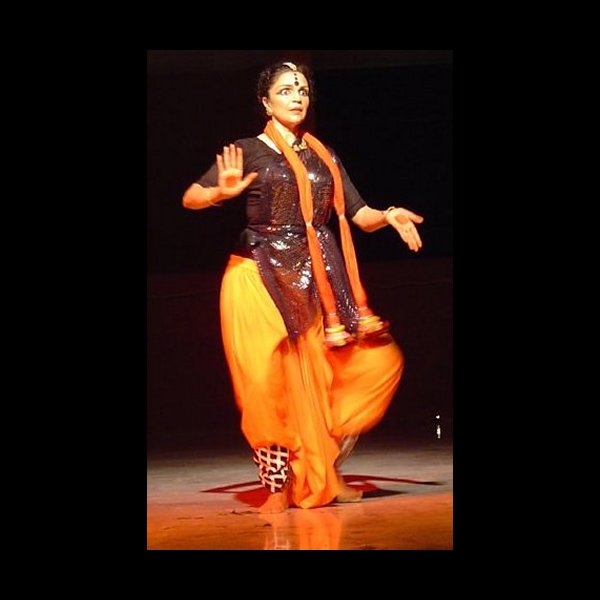
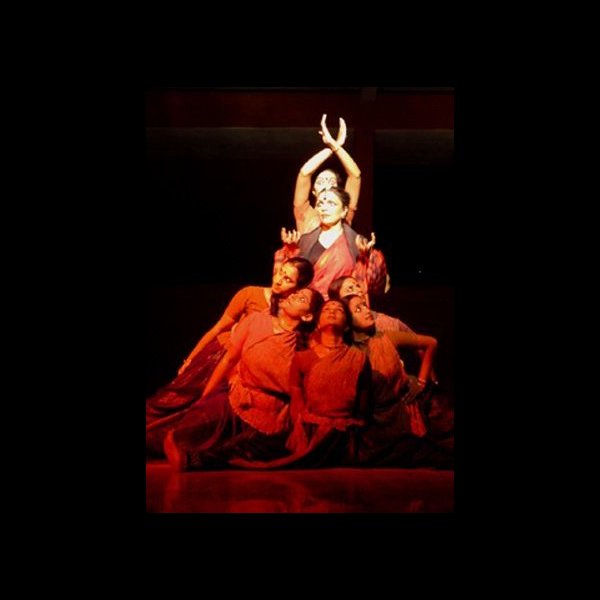
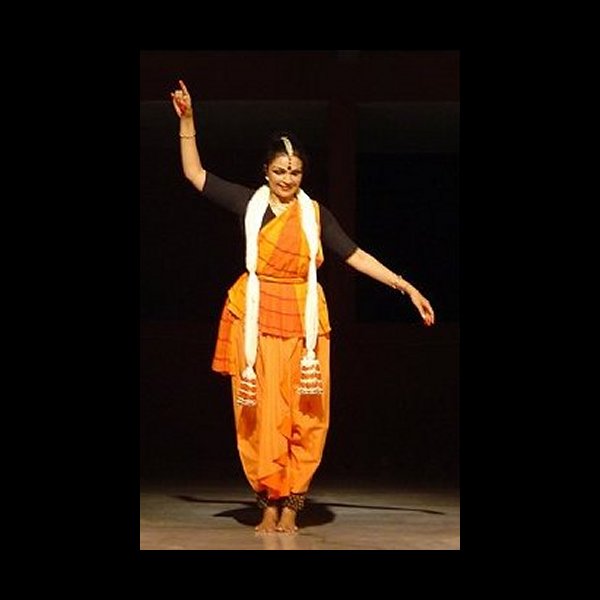
The title is a Tamizh word for Devi in all her many forms... as the graceful Saraswati, the gentle Lakshmi and the ferocious Kali. This presentation of ANDARI focuses on the creation of Durga to combat the evil and mighty forces of Mahisha that threatens to upset the balance of ecology and humanity. The spinning of the web and the creation of the rivers, seas, mountains, the elements of life, man, woman and nature is the opening sequence. Throughout the dance-theatre production the image of the arrow is maintained for the clarity and focus for Durga. She was created to annihilate Mahisha and she is manifested from the best energies of the entire universe. She is mighty and magnificent, powerful and swift as an arrow racing to hit its mark. ANDARI also contains within its creative crucible the Tamizh symbolism of Durga as Amman. The neem leaves and bright yellow colour is a local metaphor for devotion as trance. The final conflict is a battle of the many armed ANDARI/DURGA as a warrior who ensnares Mahisha in her deadly web. The soundscape contains various sources from Sanskrit chanting, new creations and old Tamizh folk songs from the villages. The battle leaves ANDARI fatigued and enraged at the greed and cruelty of man. Disgusted with her own creation, she decides to destroy all life in order to create again. And so the cycle continues.. like the annual ritual of the nine days and nights of revelry, fasting and prayer. Invoking the Goddess during the auspicious festival of Navaratri draws us into the divine web of life and death.  |